
A major European retail chain operates a vast network of nearly 600 supermarket locations across multiple countries. Each site utilizes Huawei iMaster NCE-Campus for robust wired and wireless network access control.
The customer needed a unified, cloud-based platform to manage all aspects of public and internal device connectivity. The scale of the challenge involves:
- High traffic: Managing over 10,000 daily guest visits across the entire estate.
- IoT density: Securing and controlling access for an average of 300+ non-interactive IoT devices per store
The goal was to transform their Wi-Fi from a decentralized utility into a centralized asset that enhances the customer experience, drives marketing insights, and simplifies IT governance.
Challenges
The distributed nature of the retailer's infrastructure created several critical hurdles that prevented scale, efficiency, and full compliance:
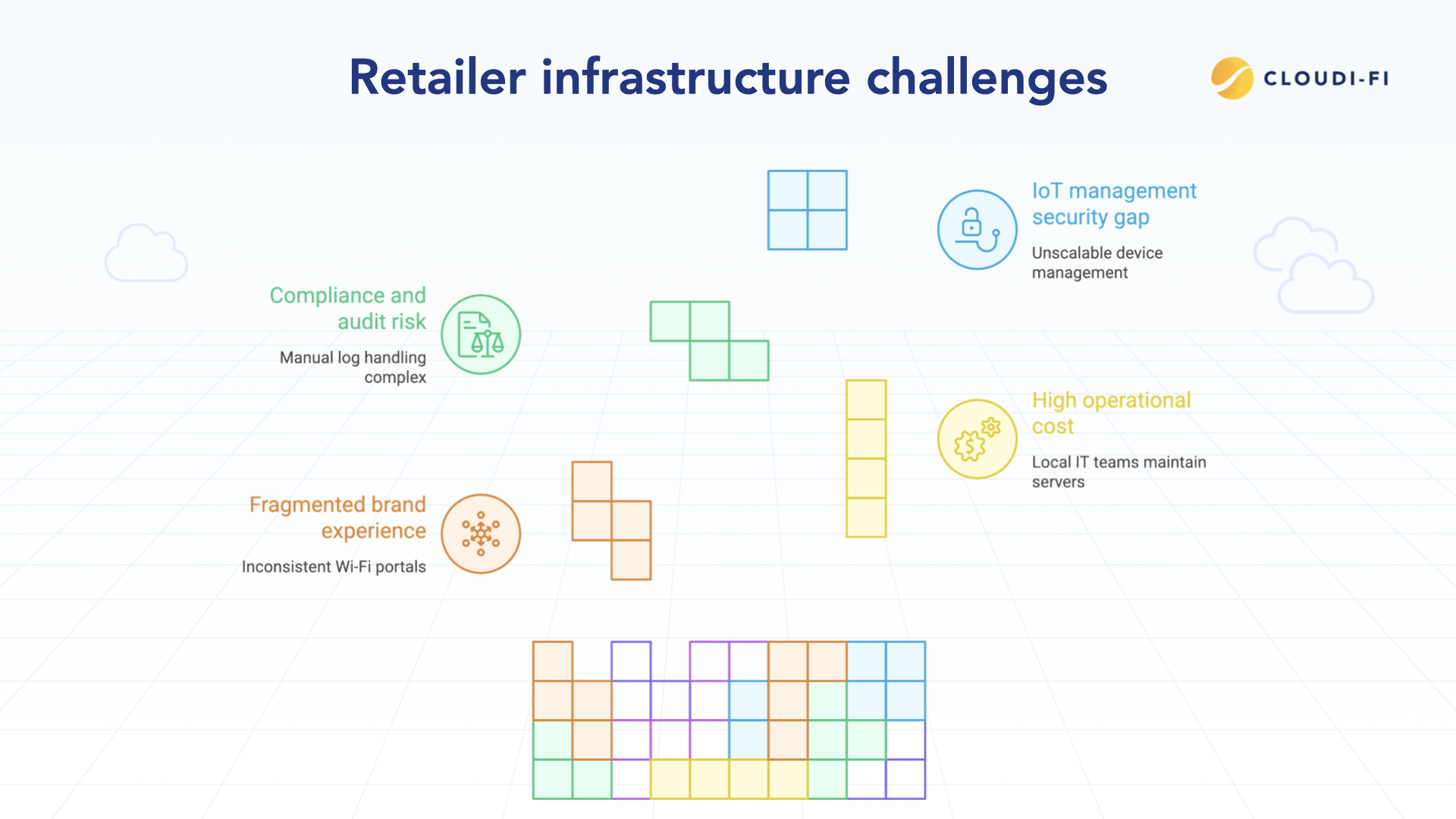
1. Fragmented brand experience & marketing inertia
Guest Wi-Fi portals were inconsistently configured across different regions. Any attempt to launch a national promotion or update branding required manual effort across multiple local systems, leading to high administrative costs and slow time-to-market for campaigns.
2. High operational cost & complexity
Relying on local or regional IT teams to maintain on-premises servers, manage authentication logs, and troubleshoot portals resulted in high Total Cost of Ownership (TCO) and significant IT overhead. There was no single pane of glass for monitoring or policy enforcement.
3. Compliance and audit risk
The lack of a central, automated system for handling user access logs made compliance with mandatory data retention and privacy laws complex and auditing a laborious, manual process. Storing any customer data (PII) locally on network devices created unnecessary legal risk.
4. IoT management security gap
The massive fleet of non-interactive devices needed a secure, reliable way to connect without compromising network security. Managing these static identities through local spreadsheets or basic network configurations was unscalable and posed a significant security risk.
Solution: Centralized cloud control via smart handshake
The retailer implemented Cloudi-Fi as the Central Brain integrated with Huawei iMaster NCE-Campus using the Third-Party Portal Server mode. This architecture separates network enforcement from policy intelligence, ensuring stability and scale.
The smart handshake workflow
This two-way communication eliminates the need for local portal management and servers:
- Connection: A customer or IoT device connects to the Huawei-managed network.
- Detection & Redirect: Huawei's NCE-Campus detects the unauthenticated user/device and sends a secure redirect signal to the Cloudi-Fi cloud platform.
- Authentication & Branding: Cloudi-Fi displays the branded, language-optimized portal (for guests) or checks the central identity list (for IoT devices).
- Policy Grant: Upon successful authentication, Cloudi-Fi sends an immediate access approval signal back to Huawei's NCE-Campus.
- Access Enforcement: The Huawei system instantly grants the appropriate network access based on the policy (e.g., guest Wi-Fi access with bandwidth limits, or restricted access for an IoT device).
Centralized IoT device identity
For the 300+ IoT devices per store, Cloudi-Fi maintains a Centralized Device Identity List. This allows the Huawei system to verify the device's MAC address against the central, approved list. This ensures that only known, essential devices are granted segmented network access, while all other devices are blocked or forced through the guest portal.
Key benefits
The unified solution transformed the retailer's network operations and customer engagement strategy:
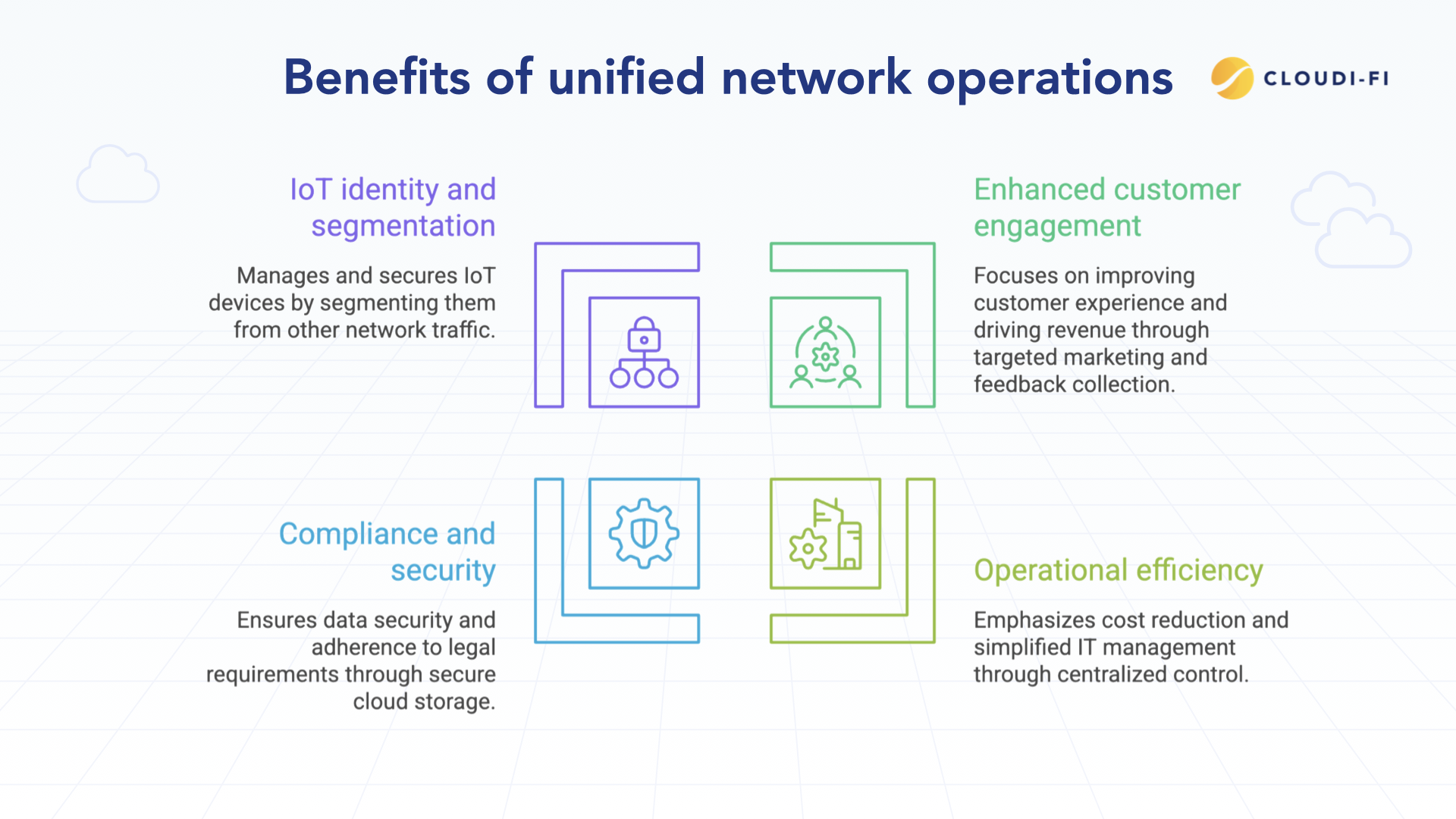
Enhanced customer engagement and revenue
- Global brand consistency: Instantly deploy branding and legal updates across all 600 sites from one cloud dashboard.
- Actionable insights: Collect real-time customer sentiment (NPS, feedback) through integrated surveys, providing local store managers with immediate, relevant data.
- Dynamic campaigns: Utilize contextual information (store location, time of day) to display targeted promotions, turning the Wi-Fi network into a measurable marketing channel.
Massive operational efficiency
- Zero on-premises portal servers: Eliminated the cost and maintenance burden associated with local VMs and servers in hundreds of stores, significantly reducing TCO.
- Simplified IT governance: Centralized access policy management simplifies troubleshooting and cuts the time required to onboard a new store from weeks to minutes.
Rock-solid compliance & security
- Audit-ready data: All 10,000+ daily access logs are securely stored and managed in the Cloudi-Fi cloud, simplifying audits and automatically enforcing data retention laws.
IoT identity and network segmentation
- Secure IoT segmentation: Managed access control for all 18,000+ total IoT devices, ensuring they are segmented from guest and corporate traffic, enhancing overall security posture.