

When designing wireless services, IT departments usually create one service/SSID for employees and one for visitors (see deployment tips for best practices). The wireless service for visitor usually relies on self service (user creates his account directly on the portal) or sponsorship (either the employee or the receptionist will create the account for the visitor).
In any case, your employees can very easily connect their professional devices to the guest service (and be sure they will!). This brings some confusion, some issues (device may switch between SSIDs) and security concerns (if the policies are not aligned). Many businesses find it crucial to restrict internet access at work to boost productivity and secure their networks.
Four tips to force your employees not to use the Guest Wi-Fi service
1) Provide a service aligned with needs
Okay, this may seem obvious but, if you provide a good connectivity to users and if they have access to whatever they need, they will certainly not try to find something better.
I have seen companies providing a good smartphone with Wi-Fi access to Internet and they never tried to connect on another SSID.
Same on laptops, if you provide a seamless (but secured) access to Internet (whatever the browser or application he uses), users will not need to try another solution. A key reason to limit access and block employees from using unauthorized networks is to enhance employee productivity and protect the company's network security.
2) Degrade user experience for employees on guest SSID
Don’t worry, I’m not talking about a mediocre Internet access. I’m talking about implementing limitation that matches exactly the visitor needs (in terms of bandwidth quota, time quota, filtering, opening hours for example) but not your employees needs. Employees may switch to the guest SSID but will quickly go back to the official one! Restricting internet access addresses clear operational risks.
3) Block the SSID on professional devices
For some operating system, it is possible to block some Wi-Fi SSIDs via a policy pushed to the device (MDM, GPO or anything similar). Blocking employees from accessing the guest SSID on their work computer is an effective way to limit access to unauthorized networks.
Here are a few links to implement this restriction:
- On Windows via GPON)
- On Windows via Command Line
- On MacOS X, it seems only possible to cheat with a script
- For Android and Apple IOS, seems not possible.
If you are not able to block an SSID, you can push the configuration for the SSID with wrong security settings.
Example: Considering your visitor SSID is named “MyCompany visitors” and is configured an open SSID (which is usually the case for guest access). Just push a profile for “MyCompany visitors” configured with a WEP key and the device will never be able to connect.
Note that most routers offer limited filtering options, but you can use router settings to block specific websites by entering URLs or keywords related to unwanted websites. This helps block employees from accessing inappropriate or unauthorized sites and further limits access to risky content.
4) Converge both SSIDs
This is the ultimate approach. Having a single SSID that delivers both services can significantly improve performance and reduce network complexity. (Read our use case: Controlling SSID proliferation for better Wi-Fi performance to understand why minimizing SSIDs helps optimize wireless networks.)
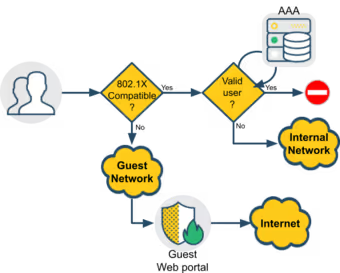
This can be achieved, for example, with 802.1X authentication. A corporate laptop will automatically authenticate using login credentials or a certificate, while any other device will be redirected to a web portal where the visitor can authenticate.
This approach is particularly effective in enterprise environments where device onboarding and identity-based segmentation are critical. Learn more about our enterprise Wi-Fi secure onboarding solution to see how organizations align employee and guest access while maintaining strong security and compliance standards.
Employee monitoring and internet use
Employee monitoring and internet use management are essential for maintaining both network security and employee productivity in any business environment. By implementing robust internet access policies, companies can restrict access to certain websites and block specific websites that pose risks to sensitive company data. For example, limiting access to social media sites and risky content helps protect company data — check our Guest Wi-Fi security best practices for more ways to secure your wireless networks.
1. Using DNS filtering to block unwanted websites
One effective way to manage access and block unwanted websites is through DNS filtering. This tool allows businesses to block access to specific IP addresses or entire categories of websites, such as adult content or online gaming, directly at the network level. DNS filtering is especially valuable for small businesses looking to protect company data without investing in complex infrastructure. Additionally, browser extensions can be deployed on individual devices to block access to specific websites, further enhancing network security and ensuring that employees are not accessing inappropriate websites or blocked sites during work hours.
2. Bandwidth management to improve Wi-Fi performance
Bandwidth management is another critical tool for maintaining seamless connectivity and preventing poor Wi-Fi performance. By limiting access to bandwidth-intensive websites—such as streaming services or large file-sharing platforms—businesses can ensure that essential applications receive the necessary internet connection for optimal performance. Restricting access to platforms like YouTube or social media during work hours also helps maintain employee productivity and keeps the focus on business-critical tasks.
3. Portal-based authentication and access control
To enforce differentiated access policies between employees and visitors, authentication can be handled directly at the portal level. Discover how the Cloudi-Fi cloud captive portal features provide flexible authentication methods, identity-based access control, and granular policy enforcement for secure Wi-Fi access.
4. Establishing clear internet use policies
To further protect sensitive information, companies should establish clear internet access policies that prohibit employees from accessing sensitive company data on public Wi-Fi networks or using unauthorized USB drives. Integrating CRM systems with internet monitoring tools can provide valuable insights into employee internet use, helping businesses identify potential risks and ensure compliance with company policies.
Managing guest WiFi access is equally important. Using captive portals, businesses can control who connects to the wireless network, ensuring that only authorized users have access to the internal network and company data. This not only enhances network security but also helps maintain professionalism and reduce legal risks associated with unauthorized access.
Promoting internet safety and security awareness through targeted marketing efforts can further reinforce the importance of following internet use policies. By educating employees about the risks of accessing harmful websites and the consequences of violating internet access policies, companies can foster a culture of security and responsibility.
Summary
Effective employee monitoring and internet use management are critical for protecting sensitive company data, maintaining network security, and ensuring employee productivity. By leveraging tools such as DNS filtering, browser extensions, bandwidth management, and CRM integration, and by implementing comprehensive internet access policies, businesses can create a secure and efficient work environment. These strategies, combined with ongoing education and clear communication, form a complete guide to managing internet access and safeguarding company data in today’s digital workplace.